Technical Records: The Hidden Value Behind Every Aircraft
When evaluating an aircraft, attention naturally focuses on its age, flight hours, cycles, maintenance condition, and overall appearance.
Yet one of the most valuable components of an aircraft is something passengers will never see: its technical records.
An aircraft may be in excellent physical condition, but incomplete, inaccurate, or poorly organized documentation can significantly affect its operational flexibility, marketability, and financial value.
In aviation, an aircraft’s history is as important as the aircraft itself.
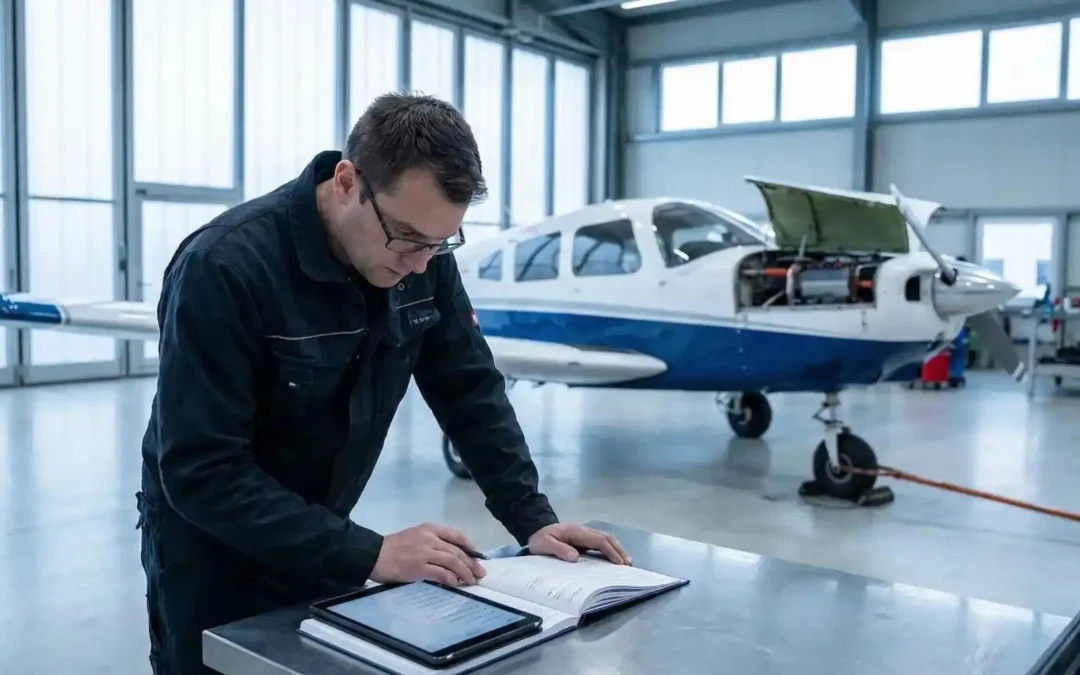
Technical records provide the documented evidence needed to establish maintenance status, regulatory compliance, component traceability, and the history of modifications and repairs.
These records include maintenance checks, Airworthiness Directive compliance, service bulletin incorporation, component installation and removal histories, life-limited parts, structural repairs, and other essential documentation.
For airlines, maintaining accurate records is not simply an administrative responsibility. It is a fundamental element of continuing airworthiness management.
For aircraft owners and lessors, documentation quality can also influence asset value and the efficiency of future transactions.
Problems frequently emerge during aircraft acquisitions, lease returns, financing arrangements, or transfers between operators.
Missing documentation may require extensive research, reconciliation, additional inspections, or corrective maintenance before an aircraft can be accepted by its next operator.
In some circumstances, incomplete traceability can create significant financial exposure.
This is why accurate aircraft maintenance records and complete maintenance documentation are essential. They help demonstrate compliance with applicable safety regulations, establish component history, and provide confidence in an aircraft’s maintenance status during operational and commercial assessments.
Digitalization has improved the ability to store and retrieve aircraft documentation, but converting paper records into electronic files does not automatically create an effective records management system.
Documents must be correctly classified, indexed, verified, and linked to the relevant aircraft, engine, component, or maintenance event.
A poorly organized digital archive can be as problematic as a warehouse filled with unclassified paper records.
The solution is proactive records management.
Airlines should establish consistent documentation standards, conduct periodic records audits, reconcile discrepancies promptly, and ensure that maintenance providers deliver complete and accurate records after every maintenance event.
Regular aircraft records audits can help identify missing documents, inconsistencies, incomplete component histories, and gaps in maintenance traceability before they become larger operational or financial issues.
Technical records should be maintained with the same discipline applied to the aircraft itself.
A Real-World Perspective
In a recent engagement, an airline approached B+B Solutions to support the transfer of technical documentation for three aircraft into its own maintenance management system. What initially appeared to be a straightforward records migration project required a detailed review, organization, and reconciliation of the aircraft’s historical maintenance documentation. During the process, several discrepancies were identified, providing an opportunity for our team to work alongside the airline’s technical personnel to investigate and help resolve outstanding issues while ensuring that the records were accurately incorporated into the new system.
This experience highlighted an important lesson: technical records management is not simply about transferring documents from one system to another. It is about ensuring the integrity, traceability, and reliability of the information that supports an aircraft’s continued airworthiness and long-term asset value. A properly executed records migration can become a valuable opportunity to identify historical gaps, strengthen documentation processes, and improve the overall quality of an airline’s technical records.
Effective aircraft technical records management is particularly important during aircraft transitions, acquisitions, and lease returns, when documentation must provide a clear and reliable history of maintenance, modifications, repairs, and component status.
The value of good technical records often becomes most apparent when an aircraft changes hands. By then, however, correcting years of documentation deficiencies can be expensive and time-consuming.
B+B Perspective
At B+B Solutions, we help airlines, lessors, and aircraft owners protect asset value through comprehensive technical records management. Our services include records reviews, document reconciliation, digital organization, historical records compilation, and aircraft transition support.
Our approach to aircraft records management helps organisations improve documentation quality, strengthen maintenance traceability, and support regulatory compliance. By identifying and addressing documentation gaps, we help reduce the risks associated with aircraft transitions and protect the long-term value of aviation assets.
Incomplete records can delay transactions, increase costs, and compromise asset value. B+B Solutions can help ensure your aircraft’s documentation is as well maintained as the aircraft itself.
Is your aircraft documentation ready for its next transition?
Our dedicated customer service team is here to assist you with any questions, concerns, or inquiries you may have. Whether you need help with a specific topic or any related queries.